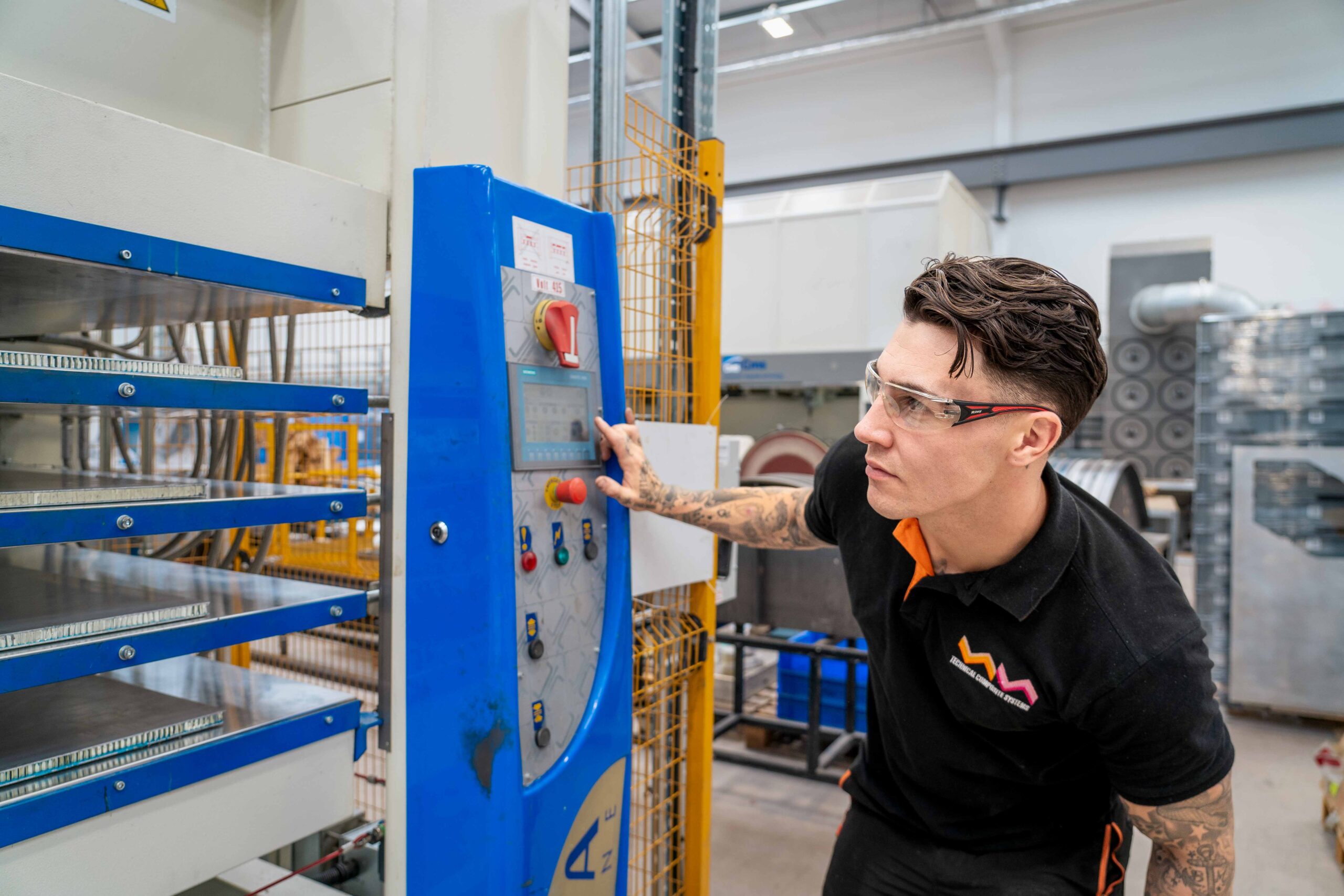
By Steve Caunter, Assistant Principal, South Devon College
Three in four engineering employers now struggle to fill key roles, according to the Institution of Engineering and Technology. In engineering construction the figure rises to 71 per cent, and to 91 per cent in the nuclear sector, now the industry’s biggest employer nationally. One recent analysis found 145 job openings for every completed engineering apprenticeship, equivalent to more than 46,000 unfilled positions.
“Energy security” is usually discussed in terms of gigawatts, gas storage and grid capacity. For businesses in the South West, the more pressing question is simpler: will there be enough trained people to build, wire, install and maintain the infrastructure it depends on?
The cost of getting this wrong isn’t abstract. Energy UK has warned the government’s £15 billion Warm Homes Plan could stall for lack of trained installers, and grid operators are already reporting delays caused by a shortage of authorised engineers and planners. For a business waiting on a grid connection or a retrofit contract, a skills shortage two steps removed from its own recruitment can still show up as a missed deadline.
A region already carrying the weight
The South West is not on the sidelines. Hinkley Point C has trained more than 1,500 apprentices during construction, beating its target well ahead of schedule, with around 70 per cent from the South West, a sign of the demand a single major energy project can create. Floating offshore wind in the Celtic Sea, ongoing National Grid upgrades and the Plymouth and South Devon Freeport, whose skills team already lists renewable energy engineers among the roles local businesses need to fill, are all adding to that demand.
Closer to home, Torbay Council declared a climate emergency in 2019 and is targeting Net Zero by 2030. The South West Net Zero Hub’s Retrofit Skills Report found the region needs 18,000 trained heating engineers to install air source heat pumps by 2030. In 2023, there were 524.
What South Devon College is doing about it
South Devon College has completed its Clean Energy Centre, a £1.5 million project funded through the Devon County Council and Torbay Council Devolution Deal, turning an existing training building on Long Road in Paignton into a regional base where businesses can train new starters and upskill existing staff in clean energy technologies: air source and ground source heat pumps, solar thermal, EV charger installation, solar PV and battery storage. A renewable energy-focused apprenticeship started last September, the only one of its kind in the area, with an aim to train, retrain or upskill 2,000 low carbon technicians, installers and retrofit specialists by 2030.
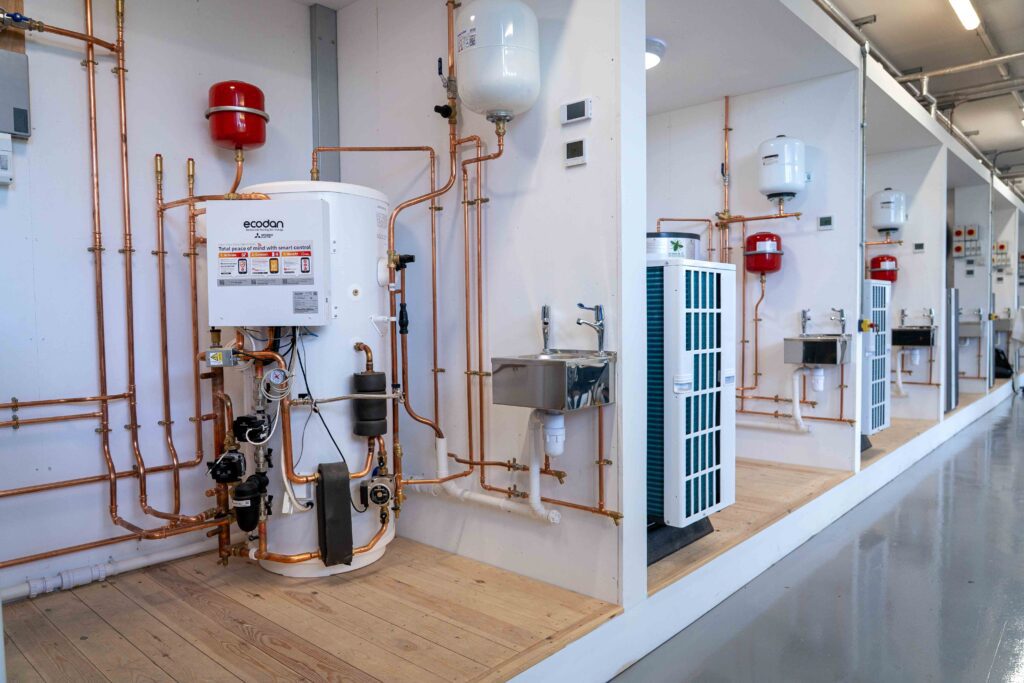
Spencer Brown, Programme Coordinator of Building Services at South Devon College, said the pace of change in the sector means the College has to work directly with manufacturers and suppliers to keep its equipment current.
The economics have shifted in employers’ favour too. From August 2026, SMEs pay nothing towards training costs for apprentices under 25, and from October 2026 can claim a £2,000 cash incentive for hiring one aged 16 to 24, on top of the existing £1,000 payment for 16 to 18-year-olds. Stacked together, that changes things for a business weighing up its first renewable energy apprentice.
The question for boards
Laurence Frewin, Principal at South Devon College, put the challenge plainly: “This is set against a challenging skills position, with the South West Net Zero Hub Retrofit Skills Report highlighting a need for 18,000 trained heating engineers for air source heat pumps by 2030. However, this is viewed against a baseline of 524 in 2023, so it’s clearly a significant challenge.”
For boards weighing up energy security and net zero commitments, the real question isn’t whether the ambition is right. It’s where the workforce to deliver it will come from. In the South West, that answer increasingly runs through further education. Businesses that want a hand in shaping that pipeline, rather than just competing for what it produces later, can get in touch at [email protected].
Article and images courtesy of South Devon College.